POLICE VIOLENCE
People of Midyat Support Journalist İş



22 non-governmental organizations supported journalist Mehmet Halis İş, reporter of the Doğa News Agency (DHA), who had been exposed to police violence when he was covering a protest action organized by the pro-Kurdish Peace and Democracy Party (BDP) on Saturday (17 July).
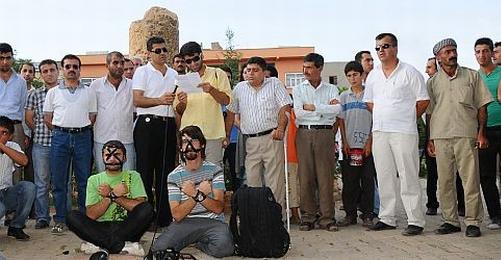
The NGO's from the city of Midyat in the south-eastern province of Mardin included representatives from different ethnic and religious groups, e.g. Syrian, Sayyid, Arabic and Kurdish organizations. They were accompanied by members of the Midiyat Civil Society Assembly and many other citizens. In a joint press release, they condemned the police intervention against a member of the press.
The police had allegedly hindered the journalists to cover the protest action of the BDP; they apparently insulted the journalists and tried to seize their cameras. The journalists expressed their criticism against the police by covering their eyes, mouth and ears with black tape and carrying hand-cuffs.
Aslan: Applications like in a dictatorship
The members of the press left their cameras on the ground and voiced their criticism as part of the protest. Mehmet Ali Aslan from the Young Businessmen Association read out a statement on behalf of the Midyat Civil Society Assembly Term Secretariat.
Aslan pointed out that the police insulted the journalists while they were fulfilling their duty and that they tried to stop the journalist from covering an event in an open area. This, Aslan emphasized, was not a feature of democracy but of a dictatorship.
Aslan called on condemning this unacceptable assault against members of the press in the public conscience. "We perceive this nasty intervention against Mehmet Halis İş and the other journalists as a shame of humanity. We see the incident as an indicator for the lack of adoption of democracy and an open society", Aslan argued.
"We demand to consider press freedom as important, not because it is a specific right for journalists, but because it is a must for democratic societies and democratization. We know that a free press means a free society. A society where the press is not free cannot be a democratic and liberal society".
Organizations supporting the journalists
Sakarya (Haldeh) Rural Development and Sustention Association, Hopeful Life Association, Young Pens Association, Syrians Culture Association, Mıhellemi Association for Dialogue between Religions, Representation of Din-Sen, Selahaddin Eyyubi Association, Narlı Village Association, Jewellers Association, Elbeğendi Village Association, Yemişli Village Association, Gülgöze Village Association, Alagöz Village Association, Young Businessmen Association, Representation of Eğitim-Sen, Representation of Özgür Eğitim-Sen, Representation of Eğitim Bir-Sen, Representation of Din Bir-Sen, Representation of the Turkish Religious Foundation-Sen, İskendereun Marder Association, Turkish Representation of the International Organization of Oppressed Peoples, Civil Media Platform. (EÖ/VK)


A graduate of the French Language and Literature Department at İstanbul University. He has served as the Turkey representative for the international organization Reporters Without Borders (RSF), where he began as a reporter in 1996. Since 1999, he has worked at bianet, a project of the IPS Communication Foundation, as the coordinator of the Legal Support Desk, editor for freedom of expression, and editor-in-chief. He has authored more than 4,800 signed news articles and opinion pieces. He has also written for Bizim Gazete and the journal Güncel Hukuk. He currently prepares the Media Monitoring Reports at bianet.



MAY 3 WORLD PRESS FREEDOM DAY
Journalism rights thrive on reader support!
BİA MEDIA MONITORING REPORT 2025
Those who want to silence journalists are now more brazen!
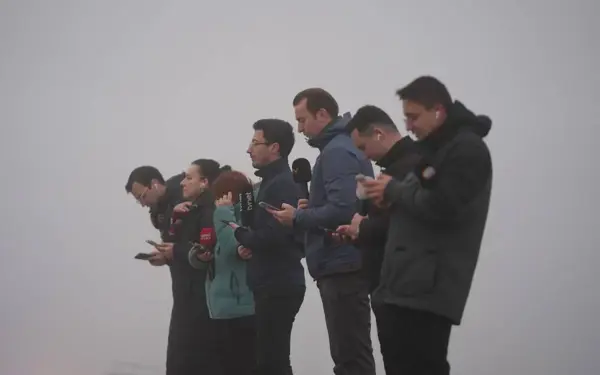
BİA MEDIA MONITORING OCTOBER-NOVEMBER-DECEMBER 2025
The future of journalism is in danger under government pressure!
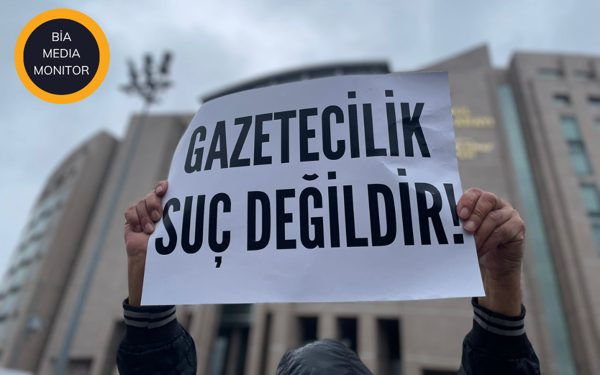
BİA MEDIA MONITORING JULY-AUGUST-SEPTEMBER 2025
Prolonged detentions and judicial control tighten pressure on journalists
BİA MEDIA MONITORING APRIL-MAY-JUNE 2025
Unprecedented pressure on journalists under the government's watch