





From the Classroom to the Newsroom 2010
"Know Your Rights and Responsibilities"

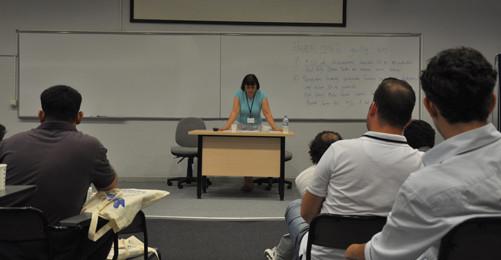



The first day of the training program "From the Classroom to the Newsroom" (OHO) was rounded out by the contributions of Fikret İlkiz, Legal Advisor of BİA and the Turkish news channel NTV, and Prof. Dr Özden Cankaya from the Galatasaray University Faculty of Communication.
"The responsibility of journalists is nested within their rights"
İlkiz informed the journalist candidates about laws that regulate the rights of the professional life of a journalist and gave an insight into rights violations that are likely to be encountered.
İlkiz emphasized the necessity for new graduates who want to work in the field of journalism to know their rights. Beyond dull theory, İlkiz came up with an exemplary work contract he worked out in co-operation with the students during the session. He warned the graduates to be aware of the legal situation including rights stemming from international and national agreements:
"Press freedom does not grant any privileges for you", İlkiz explained. "To the contrary, it burdens you with a certain duty. Your responsibility becomes the destiny of the society and democracy". İlkiz drew attention to the fact that the rights and the responsibilities of journalists entail each other.
Turning war journalism into journalism of peace
Cankaya highlighted the need for young journalists to struggle for turning the dominant rhetoric of the media into a language of peace. Cankaya warned the participants not to be carried away by pessimism.
"Looking at four years of OHO and ten years of bia and their contributions to the field of communication, we can see that the dominant rhetoric has started to change, even though the steps were cumbersome. It shows that freedom of expression can also be used beyond the mainstream media and that an independent media can exist. However, we have to put even more effort into the transformation of the media".
The responsibilities of journalists
The first day of the OHO training program set off with the statement that "another communication is possible". It finished by discussions regarding the necessary conditions to establish such a communication. Cankaya summarized the contributions of the first day and listed the responsibilities of journalists in a brief conclusive enumeration:
- A journalist should investigate all aspects of a news item and should not be pre-occupied by any side.
- to refrain from discrimination and provocation to sexism, racism or war
- to step up against rights violations and discrimination where they occur
- to use language and rhetoric carefully and attentively
- to struggle for professional rights, union rights and freedom of expression
- to refrain from making women, children and minorities objects of negative news
- to pursue a journalism for peace
- to work in favour of the people
- to fight auto-censorship
- to meticulously verify the source of a news
- not to forget that journalism is a work and the labour of ideas. (ÇT/VK)


Université Marc Bloch’da sosyoloji bölümünden mezun oldu. 2009’dan 2011’e kadar AFP’de fixer ve çevirmen olarak çalıştı. Gazeteci Burcu Karakaş ile Açık Radyo’da Cadı Postası programını yaptı. 2015 Müşerref Hekimoğlu Başarı Ödülü'nü aldı. 2011-2018 arasında bianet’te kadın ve LGBTİ haberleri editörü olarak çalıştı.

Fifth Round for "From the Classroom to the Newsroom"
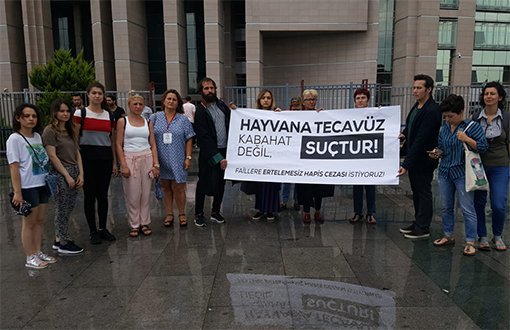
"Media, Government and Judiciary May not Connive at Rape"

Journalist Birand's Confession on PKK News

Media Throwing Stones at the Rights of the Child

Newspapers Victimize Abused Child

FROM THE CLASSROOM TO THE NEWSROOM 2010
Successful Finish of OHO 2010
FROM THE CLASSROOM TO THE NEWSROOM
Behind the Scenes of Rights Journalism: Graduates Visit bianet
Turkish Journalists Should Enter the Fray against Windmills
"From the Classroom to the News Room" in Its Third Year
Students Learn Rights Journalism

Fifth Round for "From the Classroom to the Newsroom"
"Media, Government and Judiciary May not Connive at Rape"
Journalist Birand's Confession on PKK News
Media Throwing Stones at the Rights of the Child
Newspapers Victimize Abused Child
FROM THE CLASSROOM TO THE NEWSROOM 2010
Successful Finish of OHO 2010
FROM THE CLASSROOM TO THE NEWSROOM
Behind the Scenes of Rights Journalism: Graduates Visit bianet
Turkish Journalists Should Enter the Fray against Windmills
"From the Classroom to the News Room" in Its Third Year
Students Learn Rights Journalism
.jpg)