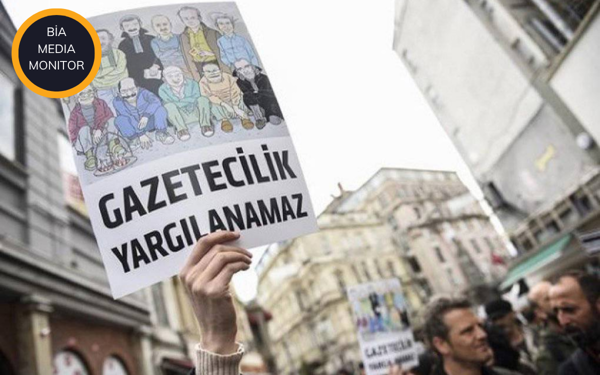
Parliamentary Commission Requests "Judicial News Editorship"
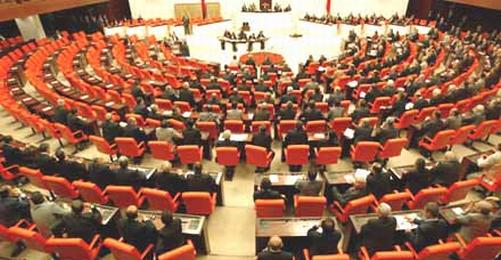



The Turkish Grand National Assembly (TBMM) Human Rights Examination Board issued an analysis report on "researching alleged violations of the presumption of innocence by certain news in the media". In the report it is stated that "the rules of journalism and of ethics in the media, which are valid for the internet as well, must not be forgotten".
The report suggests abolishing legal provisions that obstruct press secretaries of the judiciary from conveying information to the media. If necessary, media and public relations offices can be established in the judiciary in order to create proper communication channels and pass on non-confidential documents to the media, the report requests.
"A correct flow of news should be provided by creating the necessary units within official institutions. The aim is to prevent misleading information, particularly concerning incidents that are closely related to society and to legal issues, and to eliminate lack of knowledge".
The following members of the media were consulted for the report: Cumhuriyet newspaper publication director İbrahim Yılmaz, Kanal D and CNN Türk publication director Mehmet Ali Birand, NTV publication director Ömer Özgüner, Zaman newspaper general publication director Ekrem Dumanlı, head of the Press Council and Hürriyet newspaper editor in chief Oktay Ekşi, Radio and Television Supreme Council (RTÜK) President Prof. Dr Davut Dursun, Television Broadcaster Professional Union (RATEM) board president Yusuf Gürsoy, his deputy Dursun Güleryüz and Prof. Dr Haluk Şahin, director of the Bilgi University Faculty of Communication television journalism program and Radikal newspaper writer.
Certain results of the report
A "judicial news editor" should be considered as an alternative by media institutions in order to prevent possible technical mistakes made by the media on news related to judicial topics. Court correspondents should receive training regarding basic legal information and principles.
Professional standards in the media should be raised. The professional awareness of the media staff should be improved in regular seminars, panel discussions and courses organized by professional organizations and institutions.
Individual rights should be taken under stronger legal protection and individuals should be informed about legal procedures in case of violations.
The structure of RTÜK should be reviewed. Legal and structural regulations should be implemented that provide a more functional way of auditing and regulating.
In order to achieve real press freedom, a broad media-related polyphony should be made possible by legal regulations which prevent press monopolies. Union rights should be guaranteed by regulations that help creating an environment where press staff can pursue their profession more freely.
The rules of journalism and of ethics in the media, which are valid for the internet as well, should not be forgotten. Developments of the fast growing information sector should be reflected in their legal equivalents. Legal regulations should not fall behind the developments in this field; instead, they should meet the current needs.
The undersigned
The report is signed by Gökhan Sarıçam, Kırklareli deputy of the ruling Justice and Development Party (AKP) and Chair of the Sub-Commission, AKP Istanbul deputy Edibe Sözen, Republican People's Party (CHP) Sivas deputy Malik Ecder Özdemir, National Movement Party (MHP) Izmir deputy Şenol Bal and Democratic Left Party (DSP) Istanbul deputy Ayşe Jale Ağırbaş. (EÖ/VK)


A graduate of the French Language and Literature Department at İstanbul University. He has served as the Turkey representative for the international organization Reporters Without Borders (RSF), where he began as a reporter in 1996. Since 1999, he has worked at bianet, a project of the IPS Communication Foundation, as the coordinator of the Legal Support Desk, editor for freedom of expression, and editor-in-chief. He has authored more than 4,800 signed news articles and opinion pieces. He has also written for Bizim Gazete and the journal Güncel Hukuk. He currently prepares the Media Monitoring Reports at bianet.


MAY 3 WORLD PRESS FREEDOM DAY
Journalism rights thrive on reader support!
BİA MEDIA MONITORING REPORT 2025
Those who want to silence journalists are now more brazen!
BİA MEDIA MONITORING OCTOBER-NOVEMBER-DECEMBER 2025
The future of journalism is in danger under government pressure!
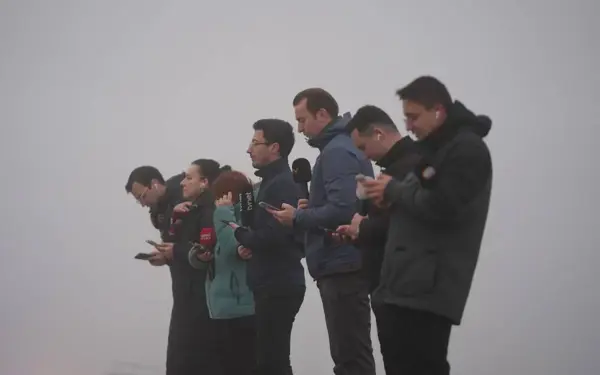
BİA MEDIA MONITORING JULY-AUGUST-SEPTEMBER 2025
Prolonged detentions and judicial control tighten pressure on journalists
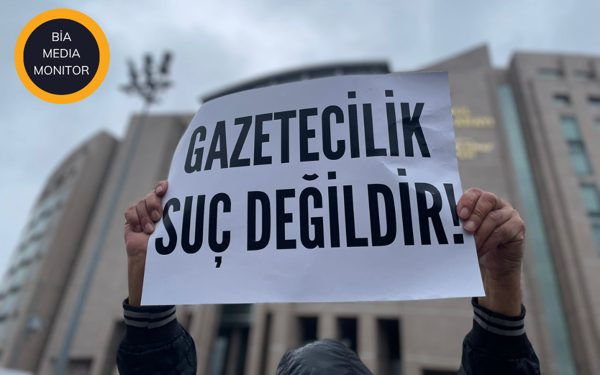
BİA MEDIA MONITORING APRIL-MAY-JUNE 2025
Unprecedented pressure on journalists under the government's watch