





"Child friendly" Draft of the Anti-Terror Law


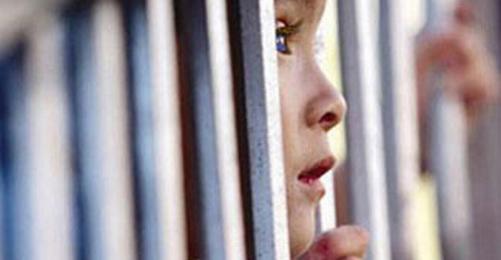



Details of the reviewed draf of the Anti-Terror Law (TMK) were announced on Monday, 14 June. The current version of the TMK stipulates the prosecution of children under the same conditions as the litigation of adults.
Lawyers Mehmet Uçum, Hatice Uçum and Gülçin Avşar from the Justice for Children Group (ÇİAÇ) evaluated the new draft bill.
Stones not accounted for as "weapons"
The lawyers explained the following amendments:
* The current regulation foresees imprisonment of up to three years for children who refuse to leave an illegal meeting or demonstration despite prior warnings. In the amended draft, this punishment was decreased to a maximum of two years.
* Children resisting the police could previously be punished with prison sentences between three and five years. The reviewed version suggests mitigation to six months as the minimum and three years as the upper limit.
* According to the present law, stones were accounted for as "weapons" and children throwing stones to police officers could be tried for "resistance" to the police. The amended draft bill lifts the crime of "armed resistance" and does not account stones for weapons. The current punishment of a five-year prison sentence shall be lifted.
Files tried at the Juvenile Court
* Article 5 of the TMK (Increase of Sentences) shall not be applied to children. In the existing law, the sentence was to be reduced by half for children. Thus, an increase of punishment was lifted.
* Release on probation for children tried under the TMK can currently be granted after the child has served three quarters of his/her prison sentence. The amended version stipulates to release children on probation after having served two thirds of their sentence.
* The draft bill orders to prosecute children at Juvenile Courts only. Current cases tried at High Criminal Courts will be transferred to juvenile courts when the amendments will have been enforced. The files pending at the Court of Appeals will be returned to the juvenile courts. The files of children who have been convicted at high criminal courts already will be overruled by the according court and tried again at the juvenile court.
Children's development and education considered
* The draft bill lifts article 34 of the Law on Meetings and Demonstrations (TGYK). The anticipated prison sentence of between three and five years shall be lifted.
* Article 34 of the TGYK on "Provisions applied to children" shall be amended. The following article is suggested in the draft bill: Children who have been convicted of membership of an illegal organization or spreading propaganda for the first time because of attending an illegal meeting or demonstration shall not be sentenced to prison. "Security measures" shall be implemented instead. This is a provision in accordance with the children's development and education. (SP/EÖ/VK)


A graduate of the French Language and Literature Department at İstanbul University. He has served as the Turkey representative for the international organization Reporters Without Borders (RSF), where he began as a reporter in 1996. Since 1999, he has worked at bianet, a project of the IPS Communication Foundation, as the coordinator of the Legal Support Desk, editor for freedom of expression, and editor-in-chief. He has authored more than 4,800 signed news articles and opinion pieces. He has also written for Bizim Gazete and the journal Güncel Hukuk. He currently prepares the Media Monitoring Reports at bianet.

İstanbul Üniversitesi Gazetecilik Bölümü mezunu. Gazeteciliğe 1998’de Milliyet‘te başladı. Sırasıyla Deutsche Welle radyosu (Bonn), Sabah gazetesi, Tempo dergisi, Akşam gazetesi ve bianet‘te çalıştı. Hrant Dink Vakfı yayınları ve Agos gazetesi kitap eki Kitap/Kirk editörlüğünü yaptı. Son olarak Milliyet gazetesinde politika editörü olarak çalıştı. Yazılarını semrapelek.com adlı blogunda yayınlıyor.
ADOPTON OF ANTI-TERROR LAW AMENDMENTS
Children no Longer Tried like Members of Terror Organizations

Mahkeme Irkçı "Sarı Gelin" Belgeselini Engellemedi
CHIDREN TRIED UNDER ANTI-TERROR LAW
Anti-Terror Draft Law on the Parliamentary Agenda
CHILDREN CONVICTED UNDER ANTI-TERROR LAW
6 Children Sentenced to 7.5 Years in Jail
CHIDLDREN UNDER CHARGES OF TERRORISM
Amendments in Anti-Terror Act not Sufficient to Protect Children
Kurdish Question and Children
Prison Sentences for 23 Children in Adana
“Children on Trial are a Problem for Whole of Turkey”

ADOPTON OF ANTI-TERROR LAW AMENDMENTS
Children no Longer Tried like Members of Terror Organizations
Mahkeme Irkçı "Sarı Gelin" Belgeselini Engellemedi
CHIDREN TRIED UNDER ANTI-TERROR LAW
Anti-Terror Draft Law on the Parliamentary Agenda
CHILDREN CONVICTED UNDER ANTI-TERROR LAW
6 Children Sentenced to 7.5 Years in Jail
CHIDLDREN UNDER CHARGES OF TERRORISM
Amendments in Anti-Terror Act not Sufficient to Protect Children
Kurdish Question and Children
Prison Sentences for 23 Children in Adana
“Children on Trial are a Problem for Whole of Turkey”
MAY 3 WORLD PRESS FREEDOM DAY
Journalism rights thrive on reader support!

BİA MEDIA MONITORING REPORT 2025
Those who want to silence journalists are now more brazen!

BİA MEDIA MONITORING OCTOBER-NOVEMBER-DECEMBER 2025
The future of journalism is in danger under government pressure!
BİA MEDIA MONITORING JULY-AUGUST-SEPTEMBER 2025
Prolonged detentions and judicial control tighten pressure on journalists
BİA MEDIA MONITORING APRIL-MAY-JUNE 2025
Unprecedented pressure on journalists under the government's watch