









The Education Monitoring Report 2009 issued by the Education Reform Initiative (EGR) focuses on urgent and important changes in Turkey's secondary education. This year's third report of the ERG assesses fundamental changes and developments experienced in 2009 and the policies that paved the way for these changes.
The report is based on data from the Ministry for National Education, data collected in household surveys by the Turkish Statistics Institute (TÜİK) and interviews with 138 students. The report reveals that only half of all students in Turkey aged 15-19 continue with secondary school education. One in three juveniles neither studies nor works.
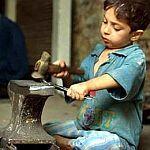
More than 2,000 students dropped out of school per day
The report was written by the Director of the Education Reform Initiative, Prof. Dr Üstün Ergüder, head of the Istanbul Policy Centre at Sabancı University. The preface was contributed by Prof. Dr Nurhan Yentürk (Istanbul Bilgi University), the epilogue was written by Prof. Dr İpek Gürkaynak (Umut Foundation). The findings of the ERG can be summarized as follows:
* In the age group of 15-19-year-olds, 26 percent of the boys and 50 percent of the girls neither are going to school nor to work. In international comparison, this ratio amounts to 8, respectively 9 percent in other OECD countries.
* Access to secondary education is dependent on significant regional disparities. 78 percent of the 14-17-year-olds are enrolled in high school in the Southern Marmara region, whereas this ratio reaches a mere 44 percent only in the South-East of the country.
* Also the parents' education level is an important influence: 17 percent of daughters of illiterate fathers and 94 percent of the daughters of university graduates go to a secondary school.
* 15 percent of all male high school students enrolled in the academic year of 2008/2009 dropped out of school. The proportion rises to 23 percent at vocational schools.
* A total of 360,000 students dropped out of high school in 2008/2009. Considering the number of school days, more than 2,000 students dropped out of school every day.
* In 2009, the per capita expenditure for secondary education amounted to TL 2,273 (€ 1,136), the figure for vocational and technical schools lay at TL 2,937 (€ 1,558) per student. For 2010, the budget is planned at TL 2,051 and TL 2,188 respectively. The reduction stems from increasing secondary education to four years and trying to make it more prevalent without allocating sufficient resources.
* Per capita expenditures for students significantly vary among different provinces: Public spending on secondary education per student in 2009 amounted to TL 1,379 (€ 690) in Istanbul and TL 3,508 (€ 1,754) in Amasya (northern Anatolia).
* In comparison to the previous year, 175,000 more children benefited from pre-school education in 2010. Three out of five 20-72-month-old children were enrolled.
Students' diverging expectations should be considered
In the preface, Prof. Dr Yentürk mentions that the expectations of the students differ due to their social and ethnic origin, gender or regional disparities. "Efforts should be taken to take these differences into account in order to strengthen the young people's participation in social life during high school. One of the reasons for the high number of students dropping out of school is the fact that these differences are not being considered. This reinforces social exclusion", Yentürk argues.
Prof. Dr Gürkaynak raises the following question in the report's epilogue: "Are we able to create an environment for our students in secondary schools that is free of homophobia, xenophobia, othering, violence, social gender discrimination and any other kind of prejudice and arbitrary use of force?" (BB/VK)