From the Classroom to the News Room
"Journalism is a Peace Profession"
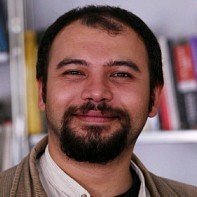



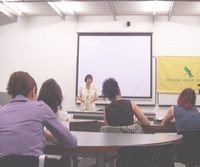
Friday was the last day of the training programme for future journalists, "From the Classroom to the News Room". Organised by the IPS Communications Foundation, the speakers on Friday were Murat Utku from the Dogan News Agency and Ragip Duran, journalist and lecturer at the Galatasaray University.
Utku: I was scared in Beirut
Utku spoke about television reporting. He led a discussion with examples from news items which he had created when the Lebanon had been attacked by the Israeli army in July 2006.
The new graduates watched the film material which showed Utku broadcasting from southern Beirut when it was being bombed. Utku said, "Of course I was scared".
Using the examples, Utku discussed the different perspectives which news channels and other channels had on news, the basic elements of television reporting, experiences of live broadcasts and the relationship between camera person and reporter.
He said, "If a reporter has prepared and researched the topic well, if she/he is in control, then she/he can report well."
Duran:"Sound of guns drowns out the sound of your pen"
Duran picked up the thread, by saying that "journalism is a peace profession, for the simple reason that the sound of guns drowns out the sound of your pen or your microphone."
For Duran, the essence of journalism is to report the reality. However, he added that there was a difference between "news" and "event", and thus between a "mediatic reality" and an "actual reality".
Giving examples, Duran also showed how a journalist's stance affects their writing and spoke about peace journalism.
Their own newspaper
The trainees also began to prepare their own newspaper issue. Under the guidance of trainers Füsun Özbilgen, Ragip Duran and Murat Celikkan, they first began by looking at previously prepared news items. On the list were items about refugee and women's rights, interviews with cinema employees, food culture in Beyoglu, central Istanbul, etc...Then the pages were planned.
Women took the lead
The trainees decided on their own editing team. Yasemin Aksit of Gazi University, Ankara, was the editor-in-chief. Erhan Kilic of Selcuk University, Konya, was the desk editor, while Müge Celebi of Galatasaray University, Istanbul, was news director.
All the page editors of the newspaper were women: Tülin Sepetci of the Mediterranean University, Antalya, Persude Erdem of Ankara University, Cagla Agirgöl of the weekly Agos newspaper, Feyza Yavuzer of the Atatürk University, Erzurum, Güllüsah Sürekli of Firat University, Elazig, and Gizem Karakis of the European University of Lefke, Cyprus.
By lunchtime (when this news item was prepared), the trainees still had to decide on what to call the six-page, A-3 newspaper, what logo and visuals to use. They sat down at the computer to complete their shared effort. (TK/AG)


IPS Training for Young Journalists
"From the Classroom to the News Room"
Children Rights Reporting Seminar in Kocaeli
Attacker of Hakkari Journalist Imprisoned
IPS Journalism Training Programme is the "Missing Link"
BİA² Freedom of Expression Workshop
“Prime Minister Should Apply Message of Tolerance at Home”

Peace Education at Bosphorus University
"From the Classroom to the News Room"
BIA: Positive Discrimination, Follow-Up and Visibility
"Day of Working Journalists Is a Joke"
IHD Activists Call for “Peace” in Many Languages
IPS Training for Young Journalists
"From the Classroom to the News Room"
Children Rights Reporting Seminar in Kocaeli
Attacker of Hakkari Journalist Imprisoned
IPS Journalism Training Programme is the "Missing Link"
BİA² Freedom of Expression Workshop
“Prime Minister Should Apply Message of Tolerance at Home”
Peace Education at Bosphorus University
"From the Classroom to the News Room"
BIA: Positive Discrimination, Follow-Up and Visibility
"Day of Working Journalists Is a Joke"
IHD Activists Call for “Peace” in Many Languages
KURDISH QUESTION
PKK Ceasefire to be Terminated on 31 October?
KCK CASE
Court Dismissed Request for Defence in Kurdish
7th Istanbul Gathering for Freedom of Thought
CONSTITUTIONAL AMENDMENTS
58 Percent Said "Yes" to Constitutional Reform Package
Rights Organizations 3 Years ahead of Foreign Minister