


Sevahir Bayındır, MP for the Democratic Society Party (DTP) in Şırnak, eastern Turkey, has brought a motion that a committee investigating child labour be formed.
In her motion, she said:
"As long as children are pushed out of education, child labour will continue. Because there are no up-to-date data showing that child labour in Turkey is decreasing, there is no wide-ranging data on child labour. There need to be policies and programmes created to solve the problem, and there needs to be research to obtain indepth information."
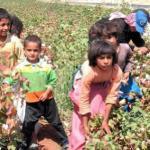
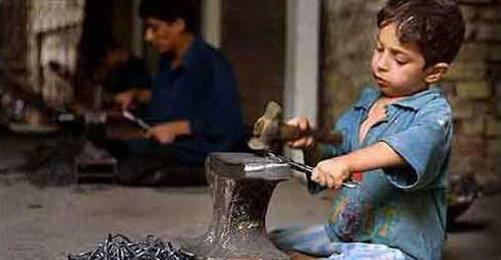
"Child labour needs to be treated as a social problem, and mechanisms to collect data and monitor child labour need to be created urgently. The worst kinds of child labour need to be abolished, and an investigative committee needs to be formed in order to solve the problems of children working under the worst conditions in industry and agriculture."
Reasons for child labour
Bayındır drew attention to the fact that migration has increased child labour:
"Rural-urban migration, related adaptation problems and the industrialisation of agriculture have all put child labour onto the agenda. Families let their children work in the streets in order to raise their income. The underlying reasons for child labour are poverty, migration, traditional family structures, lack of education, unemployment, demand for cheap labour, insufficient work regulations and lack of implementation of existing regulations."
Turkey one of the worst offenders
According to a recently published International Labour Organisation (ILO) report, Turkey is the third among the sixteen countries studied in terms of the hours that child labourers work. Only following Mali and Senegal, girls in Turkey aged 5-14 work around 30 hours a week, while boys work over 25 hours.
The average for the sixteen countries is 20.2 hours for girls and 19.2 hours for boys.
According to 2006 data, around one million children in Turkey are working.
Still many children not in school
A report published in Turkey on 11 June, produced by the Educatino Reform Initiative (ERG), there are 220,000 children aged 6 to 13 who are not registered for education in Turkey. Of these, 130,000 are girls, and 90,000 boys. Around 100,000 of the children not being educated are from central Anatolia and the southeast of the country. In addition, there are children who are not even registered as born, and have thus not been counted.
If a household is attached to a social security institution through work, this increases the probability of a child attending middle school (years 6-8) by 15 percent. However, around 54 percent of urban families have no steady income. This rate is at 84 percent in Gaziantep and 91 percent in Diyarbakır, in the southeast of the country.
Child labour in many sectors
According to the child labour report of the Turkey Statistical Institute (TÜİK), six percent of Turkey's 6-17-year-old population is working. 66 percent of these are boys, and 34 percent girls. 41 percent work in agriculture, 28 in industyr, 23 in trade and 9 percent in the service industry. (TK/AG)