FREEDOM OF EXPRESSION
Children Suffer as "Terror" Remains Ambigious in Courts



Human Rights Watch (HRW), Amnesty International (AI) and International PEN representatives also made presentations during the 6th Istanbul Meeting of the Initiative Against Thought Crime, held in Bilgi University this weekend.
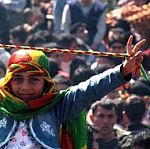
HRW's reporter in Turkey, Emma Sinclair-Webb expressed concern over children being sentenced to heavy penalties by courts as if they're "terrorist militants". During last year several hundred children were judged as such by courts in Diyarbakır, Adana and Mersin among others.
Siclair-Webb warned that the problem arose from Article 220 and 314 of the Turkish Penal Code, which states that individuals should be punished as "terrorist organization members" even if they participate in an event, called by such an organization.
Prolonged arrests of the children also pose a problem, she added.
An example is the case of Murat Işıkırık, a student at Dicle University who was sentenced to three years in prison for allegedly applauding and making peace gestures aside a protest organized by the Kurdish rebel group PKK.
Sinclair-Webb drew attention to a Supreme Court of Appeals ruling, which allows local courts to harshly penalize children. In a 2006 ruling, the court saw a call to protest by the PKK enough evidence to punish a child, who participated at the event, as its member.
She said the ambiguity around the definition of terror crimes causes problems in Turkey
Andrew Gardner from AI talked about the case against Nobel winner author Orhan Pamuk as well as other implications of the infamous Article 301 of the Penal Code and the pressure against LGBT individuals. Alexis Krikorian from IPA underlined the pressures faced by Iranian publishers.
PEN secretary general Eugene Schoulgin noted that he's been residing in Turkey since years "but we don't face such pressures."(EÖ/AGÜ)